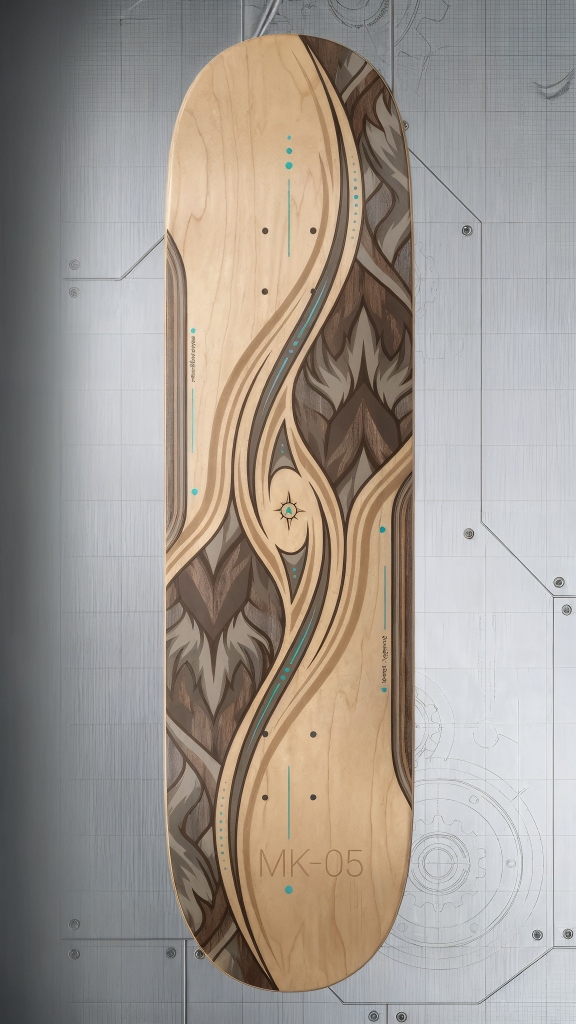
How to ollie biomechanics starts with timing and center of mass control. This guide explains ollie technique cues that create repeatable pop without wasting energy.

How to ollie biomechanics for pop and timing
Load, pop, and level are the three phases of an ollie. How to ollie biomechanics means keeping your shoulders aligned, compressing at the right moment, and releasing the tail with precision. The pop is not a stomp; it is a timed snap.
Ollie technique checklist for height and control
Ollie technique improves when you focus on ollie foot placement and the front foot drag. Ollie pop explained: the tail strike starts the lift, and the slide levels the board mid-air. If you want to improve ollie height, stay compact on the load and extend after the pop.
- Back foot: in the pocket, ready to snap.
- Front foot: angled for slide and level.
- Timing: pop then slide, not at the same time.
Pair practice with stable decks from Series 5 and test on different terrain to refine pop and snap.
For field clips and tips, follow SCATERS on Facebook. How to ollie biomechanics is the foundation, and ollie technique is the system that keeps it consistent.
How to ollie biomechanics is not about force; it is about sequence. Ollie technique becomes automatic when the timing is clean and the board levels smoothly.